A Case Study in Fiction
This post includes spoilers for Nothing Tastes as Good by Luke Dumas. There is an affiliate link to the book from Bookshop.org. Please support your local independent book store.

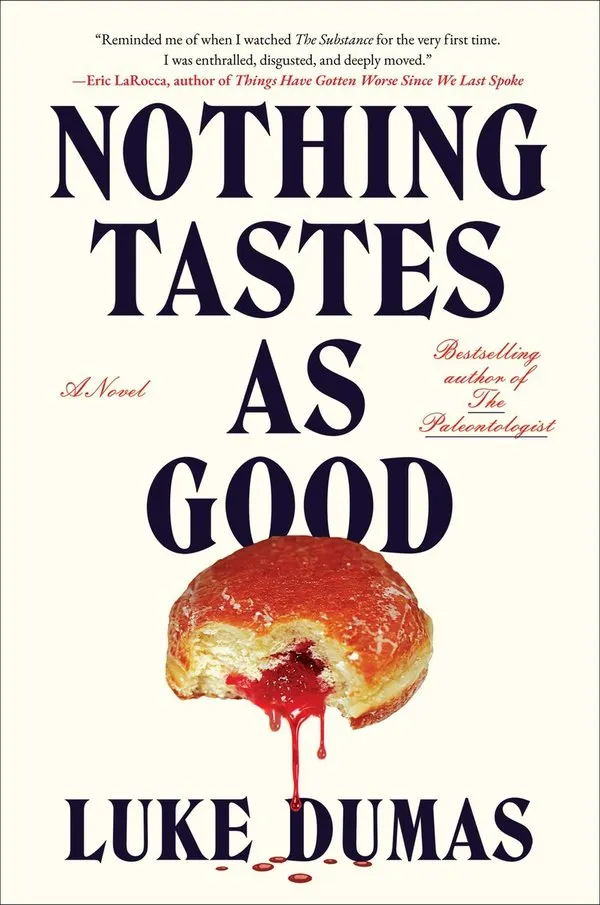
Nothing Tastes as Good is Luke Dumas’s latest novel exploring the life of a young man, Emmett Truesdale, who chooses to enroll in a clinical trial for a weight loss drug. The drug alters him in a fundamental way, creating a monstrous version of himself. The book addresses the dehumanization of people who are overweight or obese while highlighting the reasons why a person might put themselves in danger for the sake of being thinner.
Trigger warning: This post addresses the psychosocial weight stigma factors that underlie eating disorders and medical decision making.
Weight stigma is the bias society has against people due to their body size (Abrams, 2022). Weight stigma influences Emmett’s decision throughout the book. Like other biases, it can lead to dehumanizing and disenfranchising groups of people. There is a body of evidence that links weight stigma to mental health outcomes, physical health, and occupational access. It is not the “tough love” some think it is when they continually point out a loved one’s size. It is a harmful bias that has impacted approximately 40% of American adults of all sizes (Abrams, 2022).
Those who are overweight or obese are stigmatized and devalued in society (Puhl et al., 2020). Their weight is seen as a moral failing, something that is changeable only if the person dieted, exercised, and “got off” of sugar cold turkey (cough Dr. Halleck cough). Weight stigma goes hand-in-hand with weight-based stereotypes. Society holds beliefs that individuals have control over their body weight, and overweight or obesity is a reflection of poor self-control, limited willpower, and laziness. At the extreme, weight stigma leads to discrimination.
Emmett faces weight-based discrimination in his work. At Target, he is denied promotion or recognition for his work until he starts to lose weight. His job search for a career that aligns with his dream to teach is more obvious: he isn’t offered a position in his ideal work environment until after he slims down. Researchers have demonstrated a greater bias in career advancement for women who are overweight or obese than for men. Regardless of gender, weight is not a protected category under the Equal Employment Opportunity Commission.
Weight stigma is a major problem for the medical field. Nothing Tastes as Good tackles this throughout the book, from the callousness of Dr. Halleck in Emmett’s medical assessments to the devaluing of life by Dr. Saito. Emmett’s mandatory medical assessment with Dr. Halleck goes horribly wrong from the beginning. Emmett tries to describe his binge eating disorder, and he is immediately dismissed and told to “diet and exercise”. To be clear, binge eating disorder is a psychiatric and medical condition that is often comorbid with depression or other psychiatric disorders. Approximately 25% of people with binge eating disorder have suicidal ideation (American Psychiatric Association, 2022). Medical professionals need to take concerns about binge eating very seriously given the impact it has on a person’s mental and physical well-being.
Those who experience weight stigma have higher levels of cortisol (stress), which negatively impacts mental and physical well-being, including physical activity (Jackson & Steptoe, 2017). High stress levels from experiencing weight stigma can makes initiating physical activity exceptionally challenging. For Emmett, when he does go to the gym, he experiences additional weight stigma from others in the gym. He feels judged and pitied by others.
I found the scenes with mental health professionals heartbreaking. Emmett seeks out support from an eating disorder specialist and finds her rates unattainable. ProPublica published a feature on why fewer and fewer mental health professionals are taking insurance. It is a legitimate problem in our healthcare system that highly trained behavioral health professionals are undervalued in insurance panels. For many who take insurance, they are unable to make a living wage, much less afford to repay any student loans taken in order to train in behavioral health. Emmett criticizes the specialist for stating her calling is to “help people struggling with intrusive, food-related thoughts and compulsions find relief from the mental burden of preoccupation about food and their bodies” and daring to charge $400 a session. Emmett cannot afford her fee and instead turns to a therapist who is not a specialist in eating disorders. The therapy was ineffective and not evidence-based, resulting in Emmett’s self-esteem further plummeting. After all he does to try to lose weight and how much the healthcare system fails him, it is no wonder that he is eager to sign up for the Obexity clinical trial.
Employers and medical professionals are not the only ones in Emmett’s life who are critical of his body size. Weight stigma has an impact on how much a person eats. Experimental studies show that the more weight stigma a person experiences in their daily life, the higher their food intake (Vartanian & Porter, 2016). Bringing up a person’s weight is not an act of kindness or concern. Emmett’s family members often comment on his weight, usually from a place of concern. However, Emmett experiences distress at their concern. He has a deep, traumatizing history with family members enabling weight gain, teasing him for his looks, and physically and emotionally abusing him because of his weight. At his niece’s birthday party, the stress of interacting with a family system that commented on his weight for years contributes to his binge eating episode.
Emmett demonstrates internalized weight bias as well. He assumes how others see him based on his weight, and he frequently tries to downplay his size and presence. This is a stark contrast to his friend Lizette, who aims to take up as much space as possible. Lizette sees all the positive attributes that Emmett has, and she frequently tells him to embrace his size. Lizette’s body positivity comes from a good place; however, telling someone with low self-esteem about their body to “embrace it” does just as much good as telling a depressed person to stop being depressed. He has internalized this weight stigma from childhood, and he attributes his current mentality and eating to the abuse he suffered at the hands of his stepfather.
Weight stigma bleeds into how an overweight or obese person chooses to lose weight. Surgical and medical interventions are seen as “cheating”, even if these interventions are the only successful way a person has been able to lose weight. In social media spaces, people who use Ozempic or other weight loss drugs are shamed for doing so instead of dieting and exercise. Emmett sees this firsthand. He is legally bound to keep his involvement in the Obexity and EmaC-8 trial a secret at first. When he is asked by Monstera to go public, his social media followers rebel. Emmett did not help the situation; he lied for months about how he was losing the weight, even going as far as establishing a coaching business so that his “Truepers” could see weight loss success like his. Emmett felt the social clout behind the morality of thinness, of being perceived as someone who was in “control” of their body. In the end, social media proved to be just as addictive as binge eating.
Individual awareness helps with reducing weight stigma bias, but we need to call on larger systems to do their part. Protecting people from weight-based discrimination in the workplace and in the medical system is a must. For folks with internalized weight stigma, evidence-based therapy delivered by an experienced therapist can help (D’Adamo et al., 2024).
Weight stigma is a core psychosocial construct within Nothing Tastes as Good. It drives Emmett’s motivations for the clinical trial. With more than 40% of Americans experiencing weight stigma, Emmett’s experiences are too real. For those who have not directly experienced weight stigma, it allows for an empathetic view of what constant bias can do to a person’s health.
References
Abrams, Z. (2022). The burden of weight stigma. Monitor on Psychology, 53(2). https://www.apa.org/monitor/2022/03/news-weight-stigma
American Psychiatric Association. (2022). Diagnostic and Statistical Manual of Mental Disorders (5th ed., text rev.).
D’Adamo, L., Shonrock, A. T., Monocello, L., Goldberg, J., Yaeger, L. H., Pearl, R. L., & Wilfley, D. E. (2024). Psychological interventions for internalized weight stigma: A systematic scoping review of feasibility, acceptability, and preliminary efficacy. Journal of Eating Disorders, 12, 197. https://doi.org/10.1186/s40337-024-01132-7
Jackson, S. E., & Steptoe, A. (2017). Association between perceived weight discrimination and physical activity: A population-based study among English middle-aged and older adults. BMJ Open, 7. https://doi.org/10.1136/bmjopen-2016014592
Puhl, R. M., Himmelstein, M. S., & Pearl, R. L. (2020). Weight stigma as a psychosocial contributor to obesity. American Psychologist, 75(2), 274–289. https://doi.org/10.1037/amp0000538
Vartanian, L. R., & Porter, A. M. (2016). Weight stigma and eating behavior: A review of the literature. Appetite, 102, 3–14. https://doi.org/10.1016/j.appet.2016.01.034