
Tag: psychology

  • The Trad Wife Who Time Traveled: A Clinical Look at Yesteryear

    The Trad Wife Who Time Traveled: A Clinical Look at Yesteryear

    A Case Study in Fiction

    This post contains MAJOR SPOILERS for Yesteryear. Absolutely do not read further if you have yet to read the book. There is an affiliate link from Bookshop.org. Please support your local independent bookstore.

    Caro Claire Burke’s Yesteryear (2026) demonstrates how disconnection from memory creates a sense of loss in time. Natalie, a modern-day trad wife influencer, wakes up in 1855, confused, lost, and disoriented. Her memory jumps from present-day events to yesteryear, an unfamiliar time. In this 1855 setting, she has children she does not remember birthing, a husband she is unfamiliar with, and a lifestyle she does not know how to survive. She has no memory of how she ended up here.

    Memory involves the registration, encoding, and storage of information for later retrieval (Markowitsch, 2000). Memory keeps us anchored to time and sequence, including reflecting on passage of time. Without memory, we are “lost”.

    Natalie is clearly experiencing a memory disorder. The problem is her amnesia presentation isn’t fully aligned with our typical clinical diagnoses.  Before we address the psychiatric explanations for the amnesia, let’s take a look at the organic and functional neurological disorders that can cause memory problems.

    Our understanding of amnesia comes from neurological studies. One of the most well-known case studies in memory involves a man identified as H.M. This previously healthy 23-year-old man underwent a bilateral resection of the anterior parts of his medial temporal lobes in 1953 to reduce the frequency of his intractable epilepsy. After the surgery, H.M. could not form new, stable memories. H.M.’s form of anterograde amnesia is due to damage to one or more of the limbic structures of the brain. He could not form new explicit memories, but he could continue to learn implicitly.

    Memory disorders are often associated with neurological changes. Dementias, including Alzheimer’s, are an example of neurological disorders with significant changes to memory. Brain damage, like in the H.M. case, can impact memory functioning in registration, encoding, and storage. Memory has known neurological pathways in the brain, with the limbic system involved in explicit memories and the basal ganglia system involved in implicit (procedural) memories. The prefrontal cortex is involved in short-term / working memory functions. Memory is widely distributed in the brain, and memory disorders can occur after a number of diseases (Markowitsch, 2000).

    In Natalie’s case, we do not have evidence of a neurological disease or injury that would support such a devastating case of retrograde amnesia. When there is not an organic cause of a memory problem, clinicians may consider a functional disorder. Functional neurological symptom disorder has roots in the Freudian concept of conversion disorder and is tied to the historical label hysteria (which is quite fitting in this novel). In contemporary neurology and psychology, functional disorders primarily present with alterations in voluntary motor or sensory functions (American Psychiatric Association, 2022). While historical views of functional problems centered on psychiatric distress, this is less of the case in modern diagnostics (Van Patten & Bellone, 2023). In fact, up to 50% of functional neurological disorder cases lack an identified psychological trauma or stressor (American Psychiatric Association, 2022). While the DSM only notes motor and sensory impairment, there is a growing body of research investigating the cognitive aspects of functional neurological disorders, such as memory loss (Van Patten & Bellone, 2023).

    Although there is not an injury or disease that explains the amnesic presentation, functional neurological disorders are genuinely experienced. They are not “faked” or malingering. These cases, in clinical settings, are very difficult for patients and families to process. I have evaluated memory concerns that were reported by the patient as severe (loss of personal knowledge, loss of academic knowledge; all without neurological insult or change) with memory testing coming out in the average range. Having an experience of severe memory loss contrasted with largely average memory functioning is distressing for patients and families.

    The fact that Natalie’s amnesia does not fit a classic organic or functional pattern supports the consideration of dissociative amnesia. The Diagnostic and Statistical Manual defines dissociative amnesia as “an inability to recall important autobiographical information, usually of a traumatic or stressful nature, that is inconsistent with ordinary forgetting” (American Psychiatric Association, 2022). It can be selective to a specific event or generalized for life history, and it can be associated with a dissociative fugue episode. Like functional neurological disorder and conversion, dissociative amnesia has roots in Freud’s psychoanalytic theory as a defensive mechanism employed when psychologically overwhelmed (Otgaar et al., 2019).

    Natalie’s “time travel” makes sense within the context of dissociative amnesia. The degree of memory loss is substantially more concerning than normal forgetting. In the 1855 setting, she has four unfamiliar children, the eldest being Mary. Mary is 18 years old in the 1855 setting, and Natalie is pregnant with her during her final modern-day memories. Readers assume that Natalie has lost approximately 18 years of autobiographical memory. Her pattern of amnesia seems to fit the generalized dissociative amnesia description, where there is a total loss of autobiographical information (American Psychiatric Association, 2022).

    The dissociation amnesia theory is easiest for me to believe, but it still comes with its issues. Neuroscience and metanalyses of memory studies do not substantiate a biological basis for dissociative amnesia  (Otgaar et al., 2025). There is debate in the field on the validity of dissociative amnesia, especially in the context of forensic cases and concerns about malingering (Otgaar et al., 2019; Staniloiu & Markowitsch, 2024). Dissociative amnesia is often used interchangeably with repressed memory, which is highly controversial in the scientific literature (Otgaar et al., 2019).

    There’s a deeper problem with dissociative amnesia theory: Yesteryear implies that Natalie’s loss of time is related to trauma. Trauma is exceptionally hard to define, especially since it is so subjective. For traumatic disorders like PTSD, behavioral health providers look at events that involve actual or threatened death, violence, or sexual assault (American Psychiatric Association, 2022). What we also know about trauma is that it can be well-remembered; strong memory of traumatic events has been documented in Holocaust survivors, prisoners of war, and sexual assault survivors (Otgaar et al., 2019). Natalie’s final memories of the modern-day setting include being publicly accused of sexual assault and reported death threats from her father-in-law that are not substantiated. It is certainly a stretch to assume that Natalie lost nearly 18 years of her memory due to trauma, even if the death threats were credible. Given that the DSM anchors a diagnosis of dissociative amnesia in a traumatic event, dissociative amnesia is not a perfect explanation for Natalie’s lost time.

    The in-book explanation for Natalie’s memory loss is the “pharmaceutical haze” she is in for most of the past 18 years. It is unclear what medications she’s been fed, just that the medications help keep her calm. The description vaguely sounds like benzodiazepines, which are medications used to treat depression, anxiety, and seizures. The severity of Natalie’s memory loss is not fully explained by medication use, especially when we as readers do not know the specific drug class of the pills.

    There is also a suggestion that Natalie had some sort of break with reality through progressive retreat to an older style of living to be a “good Christian”. The gradual shift from modern life to yesteryear life does not explain the amnesia (which is usually described as having an abrupt onset). Psychotic episodes are marked by delusions (such as persecutory or grandiose beliefs), hallucinations, disorganized thought/speech, disorganized motor/catatonia, or negative symptoms like anhedonia (American Psychiatric Association, 2022). Psychosis can have a gradual onset, similar to the description of Natalie’s transition from modernity to yesteryear. Memory loss is not typically reported as a symptom of psychosis. I might be able to buy into the 1855 setting as a delusion, though it is muddied by the mention of pills keeping her sedated. Once again, there is a suggestion of a clinical disorder that does not quite fit our understanding of how mental health presents itself.

    Yesteryear’s portrayal of memory and behavioral health is a good example of how literature does not always fit our diagnostic criteria and definitions. Burke presents Natalie’s situation as a psychiatric condition without fully fleshing out the symptomology. Rather, the portrayal of Natalie’s “jump” in time feels like a reflection of layperson knowledge of psychiatric memory disorders instead of a clinical diagnosis. Natalie’s symptoms do not cleanly fit dissociative amnesia, psychosis, or substance abuse. Burke even acknowledges the readers’ confusion on where to “place” Natalie in the world of mental health diagnoses; Natalie imagines her eldest daughter trying to diagnose her and coming up empty-handed. As frustrating as this is for me as a neuropsychologist, it has given me so much to chew on as a reader. Sometimes the best way to enjoy a piece of literature is to suspend disbelief.

    I would love to hear your thoughts on what’s going on with Natalie’s lost memories. What theories do you have? Visit my substack to let me know?

    References

    American Psychiatric Association. (2022). Diagnostic and Statistical Manual of Mental Disorders (5th ed., text rev.).

    Markowitsch, Hans. J. (2000). Memory and Amnesia. In M.-M. Mesulam (Ed.), Principles of Behavioral and Cognitive Neurology (2nd ed.). Oxford University Press.

    Otgaar, H., Howe, M. L., Patihis, L., Mangiulli, I., Dodier, O., Huntjens, R., Krackow, E., Jelicic, M., & Lynn, S. J. (2025). The neuroscience of dissociative amnesia and repressed memory: Premature conclusions and unanswered questions. Legal and Criminological Psychology, 30(S1), 29–46. https://doi.org/10.1111/lcrp.12272

    Otgaar, H., Howe, M. L., Patihis, L., Merckelbach, H., Lynn, S. J., Lilienfeld, S. O., & Loftus, E. (2019). The Return of the Repressed: The Persistent and Problematic Claims of Long-Forgotten Trauma. Perspectives on Psychological Science, 14(6). https://doi.org/10.1177/1745691619862306

    Staniloiu, A., & Markowitsch, H. J. (2024). Dissociative Amnesia: Remembrances Under Cover. Topics in Cognitive Science, 16(4), 590–607. https://doi.org/10.1111/tops.12734

    Van Patten, R., & Bellone, J. A. (2023). The neuropsychology of functional neurological disorders. Journal of Clinical and Experimental Neuropsychology, 45(10), 957–969. https://doi.org/10.1080/13803395.2024.2322798
  • “Just Diet and Exercise”: Weight Stigma in Nothing Tastes as Good

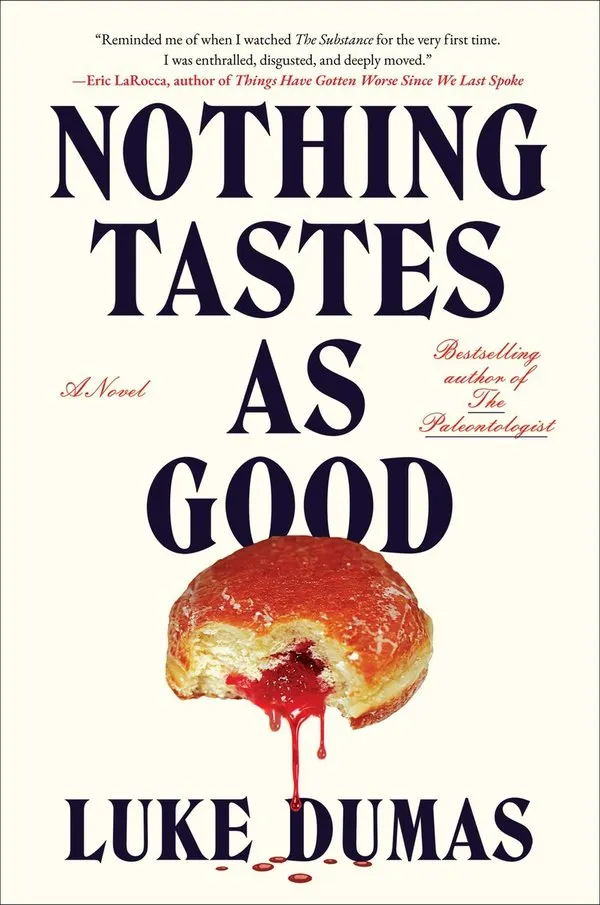
    “Just Diet and Exercise”: Weight Stigma in Nothing Tastes as Good

    A Case Study in Fiction

    This post includes spoilers for Nothing Tastes as Good by Luke Dumas. There is an affiliate link to the book from Bookshop.org. Please support your local independent book store.

    Nothing Tastes as Good is Luke Dumas’s latest novel exploring the life of a young man, Emmett Truesdale, who chooses to enroll in a clinical trial for a weight loss drug. The drug alters him in a fundamental way, creating a monstrous version of himself. The book addresses the dehumanization of people who are overweight or obese while highlighting the reasons why a person might put themselves in danger for the sake of being thinner.

    Trigger warning: This post addresses the psychosocial weight stigma factors that underlie eating disorders and medical decision making.

    Weight stigma is the bias society has against people due to their body size (Abrams, 2022).  Weight stigma influences Emmett’s decision throughout the book. Like other biases, it can lead to dehumanizing and disenfranchising groups of people. There is a body of evidence that links weight stigma to mental health outcomes, physical health, and occupational access. It is not the “tough love” some think it is when they continually point out a loved one’s size. It is a harmful bias that has impacted approximately 40% of American adults of all sizes (Abrams, 2022).

    Those who are overweight or obese are stigmatized and devalued in society (Puhl et al., 2020). Their weight is seen as a moral failing, something that is changeable only if the person dieted, exercised, and “got off” of sugar cold turkey (cough Dr. Halleck cough). Weight stigma goes hand-in-hand with weight-based stereotypes. Society holds beliefs that individuals have control over their body weight, and overweight or obesity is a reflection of poor self-control, limited willpower, and laziness. At the extreme, weight stigma leads to discrimination.

    Emmett faces weight-based discrimination in his work. At Target, he is denied promotion or recognition for his work until he starts to lose weight. His job search for a career that aligns with his dream to teach is more obvious: he isn’t offered a position in his ideal work environment until after he slims down. Researchers have demonstrated a greater bias in career advancement for women who are overweight or obese than for men. Regardless of gender, weight is not a protected category under the Equal Employment Opportunity Commission.

    Weight stigma is a major problem for the medical field. Nothing Tastes as Good tackles this throughout the book, from the callousness of Dr. Halleck in Emmett’s medical assessments to the devaluing of life by Dr. Saito. Emmett’s mandatory medical assessment with Dr. Halleck goes horribly wrong from the beginning. Emmett tries to describe his binge eating disorder, and he is immediately dismissed and told to “diet and exercise”. To be clear, binge eating disorder is a psychiatric and medical condition that is often comorbid with depression or other psychiatric disorders. Approximately 25% of people with binge eating disorder have suicidal ideation (American Psychiatric Association, 2022). Medical professionals need to take concerns about binge eating very seriously given the impact it has on a person’s mental and physical well-being.

    Those who experience weight stigma have higher levels of cortisol (stress), which negatively impacts mental and physical well-being, including physical activity (Jackson & Steptoe, 2017). High stress levels from experiencing weight stigma can makes initiating physical activity exceptionally challenging. For Emmett, when he does go to the gym, he experiences additional weight stigma from others in the gym. He feels judged and pitied by others.

    I found the scenes with mental health professionals heartbreaking. Emmett seeks out support from an eating disorder specialist and finds her rates unattainable. ProPublica published a feature on why fewer and fewer mental health professionals are taking insurance. It is a legitimate problem in our healthcare system that highly trained behavioral health professionals are undervalued in insurance panels. For many who take insurance, they are unable to make a living wage, much less afford to repay any student loans taken in order to train in behavioral health. Emmett criticizes the specialist for stating her calling is to “help people struggling with intrusive, food-related thoughts and compulsions find relief from the mental burden of preoccupation about food and their bodies” and daring to charge $400 a session. Emmett cannot afford her fee and instead turns to a therapist who is not a specialist in eating disorders. The therapy was ineffective and not evidence-based, resulting in Emmett’s self-esteem further plummeting. After all he does to try to lose weight and how much the healthcare system fails him, it is no wonder that he is eager to sign up for the Obexity clinical trial.

    Employers and medical professionals are not the only ones in Emmett’s life who are critical of his body size. Weight stigma has an impact on how much a person eats. Experimental studies show that the more weight stigma a person experiences in their daily life, the higher their food intake (Vartanian & Porter, 2016). Bringing up a person’s weight is not an act of kindness or concern. Emmett’s family members often comment on his weight, usually from a place of concern. However, Emmett experiences distress at their concern. He has a deep, traumatizing history with family members enabling weight gain, teasing him for his looks, and physically and emotionally abusing him because of his weight. At his niece’s birthday party, the stress of interacting with a family system that commented on his weight for years contributes to his binge eating episode.

    Emmett demonstrates internalized weight bias as well. He assumes how others see him based on his weight, and he frequently tries to downplay his size and presence. This is a stark contrast to his friend Lizette, who aims to take up as much space as possible. Lizette sees all the positive attributes that Emmett has, and she frequently tells him to embrace his size. Lizette’s body positivity comes from a good place; however, telling someone with low self-esteem about their body to “embrace it” does just as much good as telling a depressed person to stop being depressed. He has internalized this weight stigma from childhood, and he attributes his current mentality and eating to the abuse he suffered at the hands of his stepfather.

    Weight stigma bleeds into how an overweight or obese person chooses to lose weight. Surgical and medical interventions are seen as “cheating”, even if these interventions are the only successful way a person has been able to lose weight. In social media spaces, people who use Ozempic or other weight loss drugs are shamed for doing so instead of dieting and exercise. Emmett sees this firsthand. He is legally bound to keep his involvement in the Obexity and EmaC-8 trial a secret at first. When he is asked by Monstera to go public, his social media followers rebel. Emmett did not help the situation; he lied for months about how he was losing the weight, even going as far as establishing a coaching business so that his “Truepers” could see weight loss success like his. Emmett felt the social clout behind the morality of thinness, of being perceived as someone who was in “control” of their body. In the end, social media proved to be just as addictive as binge eating.

    Individual awareness helps with reducing weight stigma bias, but we need to call on larger systems to do their part. Protecting people from weight-based discrimination in the workplace and in the medical system is a must. For folks with internalized weight stigma, evidence-based therapy delivered by an experienced therapist can help (D’Adamo et al., 2024).

    Weight stigma is a core psychosocial construct within Nothing Tastes as Good. It drives Emmett’s motivations for the clinical trial. With more than 40% of Americans experiencing weight stigma, Emmett’s experiences are too real. For those who have not directly experienced weight stigma, it allows for an empathetic view of what constant bias can do to a person’s health.

    References

    Abrams, Z. (2022). The burden of weight stigma. Monitor on Psychology, 53(2). https://www.apa.org/monitor/2022/03/news-weight-stigma

    American Psychiatric Association. (2022). Diagnostic and Statistical Manual of Mental Disorders (5th ed., text rev.).

    D’Adamo, L., Shonrock, A. T., Monocello, L., Goldberg, J., Yaeger, L. H., Pearl, R. L., & Wilfley, D. E. (2024). Psychological interventions for internalized weight stigma: A systematic scoping review of feasibility, acceptability, and preliminary efficacy. Journal of Eating Disorders, 12, 197. https://doi.org/10.1186/s40337-024-01132-7

    Jackson, S. E., & Steptoe, A. (2017). Association between perceived weight discrimination and physical activity: A population-based study among English middle-aged and older adults. BMJ Open, 7. https://doi.org/10.1136/bmjopen-2016014592

    Puhl, R. M., Himmelstein, M. S., & Pearl, R. L. (2020). Weight stigma as a psychosocial contributor to obesity. American Psychologist, 75(2), 274–289. https://doi.org/10.1037/amp0000538

    Vartanian, L. R., & Porter, A. M. (2016). Weight stigma and eating behavior: A review of the literature. Appetite, 102, 3–14. https://doi.org/10.1016/j.appet.2016.01.034

  • Executive Functioning and Reading

    Executive Functioning and Reading

    Learning to read to reading to learn

    Reading involves the skill of decoding written words into meaning. The first step, decoding, is the process of teaching children how to connect symbols with sounds. In layman’s terms, this is “learning to read”. Comprehension of words and sounds is the next step, and it involves several cognitive and linguistic processes working in harmony. These processes work together to help “read to learn”. One of those cognitive processes is called executive functioning.

    What Are Executive Functions?

    Executive functions have been described numerous ways, and researchers have yet to agree on a formal definition. Early conceptions of executive functions describe them as a central executive system overseeing other skills (Baddeley & Hitch, 1974; Juardo & Rosselli, 2007). Most psychologists agree that executive functions involve planning, reasoning, organizing, self-regulation, attention skills, and working memory (Juardo & Rosselli, 2007).

    How do Executive Functions Impact Us?

    Executive functions use multiple areas of the brain connected through pathways that develop prenatally through adulthood (Center on the Developing Child, 2012). The areas involved in executive functioning range from the frontal lobes to subcortical structures (Kolb & Whishaw, 2021). The development of executive functioning mirrors the myelination of the frontal lobes of the brain. For example, children learn to regulate their attention and plan their actions in the preschool years (Baron, 2018). Young children can plan out how to solve simple problems (such as how to obtain a toy out of reach). Executive function development in preschool can predict later mathematic and reading abilities in children (Blair & Razza, 2007). Executive functioning also impacts social and behavioral development in young children. Executive functioning is an area of early intervention that can impact a child long term in academic, social, and behavioral domains (Center on the Developing Child, 2012).

    How are Executive Functions Related to Reading Comprehension?

    Executive functioning and reading comprehension can be conceptualized into three components (Chang, 2020):

    • Cognitive flexibility, or our ability to shift between understanding the words we are reading and making connections between the words, other texts, and our lived experiences.
    • Working memory, or our ability to hold a small amount of information for ongoing tasks.
    • Inhibitory control, or our ability to regulate our attention and behavior to relevant tasks and suppress previously learned responses; in reading, this is the skill we use to suppress incongruent word meanings and/or irrelevant connections to the text.

    These three executive functioning skills work together to support reading comprehension. There is emerging evidence that executive functioning skill development is an important prerequisite for reading comprehension (Spencer et al., 2020). Reading comprehension is predictive of a child’s overall academic functioning (Hernandez, 2011).

    People who are struggling to read individual words often have a disorder called dyslexia. Dyslexic readers use a lot of mental effort to read words that eventually become automatic for typical readers. In a typical reader, a region in the occipital-temporal lobe is active during reading. This area is called the word-form area. For many dyslexic readers, this region is not active during word reading. Instead, the frontal lobes are more active, resulting in great effort and incorporation of executive functioning areas for word reading rather than for comprehension of what is being read (“Brain Scans Reveal Disruption in the Neural Circuitry of Children with Dyslexia,” 2003). For example, children that are focused on decoding during their reading do not have the cognitive flexibility to think about semantic meaning of the words or the text as a whole (Chang, 2020).

    How Can We Use Executive Functions to Improve Reading Comprehension?

    For a person to read to learn, they must first master individual word reading. Once word reading is achieved, reading comprehension interventions can be implemented to improve understanding of written text. Executive functioning interventions are one method of treating reading comprehension deficits. Targeting working memory can help struggling reading keep phonics rules in their memory while reading as well as help with blending sounds in unfamiliar words (Perrachione et al., 2017). Graphophonological-semantic cognitive flexibility interventions have been shown to improve reading comprehension (Cartwright et al., 2020). For executive function interventions to be effective in reading comprehension, they must include both direct reading skills and the targeted executive function component.

    A version of this article was published on Psychology Today.

    References

    Baddeley, A. D., & Hitch, G. (1974). Working memory. The Psychology of Learning and Motivation, 8, 47–89.

    Baron, I. S. (2018). Neuropsychological Evaluation of the Child (2nd ed.). Oxford University Press.

    Blair, C., & Razza, R. P. (2007). Relating effortful control, executive function, and false belief understanding to emerging math and literacy ability in kindergarten. Child Development, 78(2), 647–663.

    Brain scans reveal disruption in the neural circuitry of children with dyslexia. (2003). Yale Medicine Magazine. https://medicine.yale.edu/news/yale-medicine-magazine/article/brain-scans-reveal-disruption-in-the-neural-circuitry/

    Cartwright, K. B., Bock, A. M., Clause, J. H., Coppage August, E. A., Saunders, H. G., & Schmidt, K. J. (2020). Near- and far-transfer effects of an executive function intervention for 2nd to 5th-grade struggling readers. Cognitive Development, 56, 100932. https://doi.org/10.1016/j.cogdev.2020.100932

    Center on the Developing Child. (2012). Executive Function. www.developingchild.harvard.edu

    Chang, I. (2020). Influences of executive function, language comprehension, and fluency on young children’s reading comprehension. Journal of Early Childhood Research, 18(1), 44–57. https://doi.org/10.1177/1476718X19875768

    Hernandez, D. J. (2011). Double jeopardy: How third-grade reading skills and poverty influence high school graduation. The Annie E. Casey Foundation.

    Juardo, M. B., & Rosselli, M. (2007). The Elusive Nature of Executive Functions: A Review of our Current Understanding. Neuropsychological Review, 17, 213–233.

    Kolb, B., & Whishaw, I. Q. (2021). Fundamentals of Human Neuropsychology (Eighth). Worth Publishers.

    Perrachione, T. K., Ghosh, S. S., Ostrovskaya, I., Gabrieli, J. D. E., & Kovelman, I. (2017). Phonological Working Memory for Words and Nonwords in Cerebral Cortex. Journal of Speech, Language, and Hearing Research, 60(7), 1959–1979. https://doi.org/10.1044/2017_JSLHR-L-15-0446

    Spencer, M., Richmond, M. C., & Cutting, L. E. (2020). Considering the Role of Executive Function in Reading Comprehension: A Structural Equation Modeling Approach. Scientific Studies of Reading, 24(3), 179–199. https://doi.org/10.1080/10888438.2019.1643868

  • Hyperlexia

    Hyperlexia

    Precocious reading or reading disorder?

    Hyperlexia first appeared in the literature in a 1967 paper describing young children with reading skills exceeding their language comprehension skills (Silberberg & Silberberg, 1967). The initial views of hyperlexia proposed that word recognition skills were separate from a child’s verbal functioning.

    While hyperlexia is not a diagnostic term, it can be used to describe children with unusual reading behaviors. The problem arises in defining the threshold between typical reading development and hyperlexia. Researchers disagree on definitions of hyperlexia, such as debating how much more advanced does the reading skill need to be compared to peers and does the advanced reading need to be paired with developmental disabilities (Zhang & Joshi, 2019). The lack of consensus on a definition makes researching hyperlexia difficult for psychological, educational, and developmental scientists.

    Hyperlexia can be thought of as inverse of another reading disorder called dyslexia. Reading comprehension is understood to be a complex activity requiring both adequate decoding skills and listening comprehension. A child’s decoding skills and listening comprehension work together to support their reading comprehension. This is known as the simple view of reading (Hoover & Gough, 1990). The simple view of reading is understood best by the equation:

    Decoding x Listening Comprehension = Reading Comprehension

    Children with hyperlexia have excellent decoding skills and poor listening comprehension resulting in low reading comprehension. Children with dyslexia have poor decoding skills with average to above average listening comprehension, and their profile also results in low reading comprehension. Research studies as a whole support the hyperlexic profile as a child with good decoding ability and poor listening and reading comprehension (Zhang & Joshi, 2019). Children with hyperlexia therefore have impaired reading comprehension, a type of specific learning disorder that benefits from intervention and accommodation.

    Hyperlexic profiles can be divided into three main types (Treffert, 2011):

    Hyperlexia I: Neurotypical children who are best described as precocious readers. Many of these children may have early access to reading materials. Some researchers argue that precocious reading should not be considered hyperlexia (Ostrolenk et al., 2017), and most agree that there is no intervention needed for neurotypical children with advanced reading skills.

    Hyperlexia II: Hyperlexia II is associated with autism spectrum disorder. Many autistic people have unevenly developed cognitive profile, and some have what is called a splinter skill (Treffert, 2014): a skill or interest that is unusually high compared to a person’s other skills.

    It has been estimated that between 6%-20% of autistic children also have hyperlexia (Ostrolenk et al., 2017).  

    Hyperlexia III: These children have hyperlexia paired with some features of autism, though their social communication profile may not align with the diagnostic criteria for autism. They may be sensitive to sensory information, echo language, and struggled with changes in routine. However, they also exhibit typical or near-typical social communication skills. Often, these autistic-like traits fade with age.

    A typical evaluation of hyperlexia will usually start with a broad intelligence or developmental measure. Language testing, either performed by a speech pathologist or a psychologist, is also crucial. Word reading and reading comprehension are also assessed. Finally, because of the strong overlap between hyperlexia and autism, autism-specific evaluation tools should be administered. These can include a comprehensive developmental history, direct testing, record review, parent surveys, and inventories of autistic traits. Typical intervention recommendations include speech/language therapy.

    A version of this article appears in Psychology Today.

    References

    Hoover, A., & Gough, B. (1990). The simple view of reading. Reading and Writing: An Interdisciplinary Journal, 2, 127–160.

    Ostrolenk, A., Forgeot d’Arc, B., Jelenic, P., Samson, F., & Mottron, L. (2017). Hyperlexia: Systematic review, neurocognitive modelling, and outcome. Neuroscience & Biobehavioral Reviews, 79, 134–149. https://doi.org/10.1016/j.neubiorev.2017.04.029

    Silberberg, N. E., & Silberberg, M. C. (1967). Hyperlexia—Specific Word Recognition Skills in Young Children. Exceptional Children, 34(1), 41–42. https://doi.org/10.1177/001440296703400106

    Treffert, D. A. (2011). Hyperlexia III: Separating ‘Autistic-like’ Behaviors from Autistic Disorder; Assessing Children who Read Early or Speak Late. 110(6).

    Treffert, D. A. (2014). Savant Syndrome: Realities, Myths and Misconceptions. Journal of Autism and Developmental Disorders, 44(3), 564–571. https://doi.org/10.1007/s10803-013-1906-8

    Zhang, S., & Joshi, R. M. (2019). Profile of hyperlexia: Reconciling conflicts through a systematic review and meta-analysis. Journal of Neurolinguistics, 49, 1–28. https://doi.org/10.1016/j.jneuroling.2018.08.001