A Case Study in Fiction
This post contains MAJOR SPOILERS for Yesteryear. Absolutely do not read further if you have yet to read the book. There is an affiliate link from Bookshop.org. Please support your local independent bookstore.

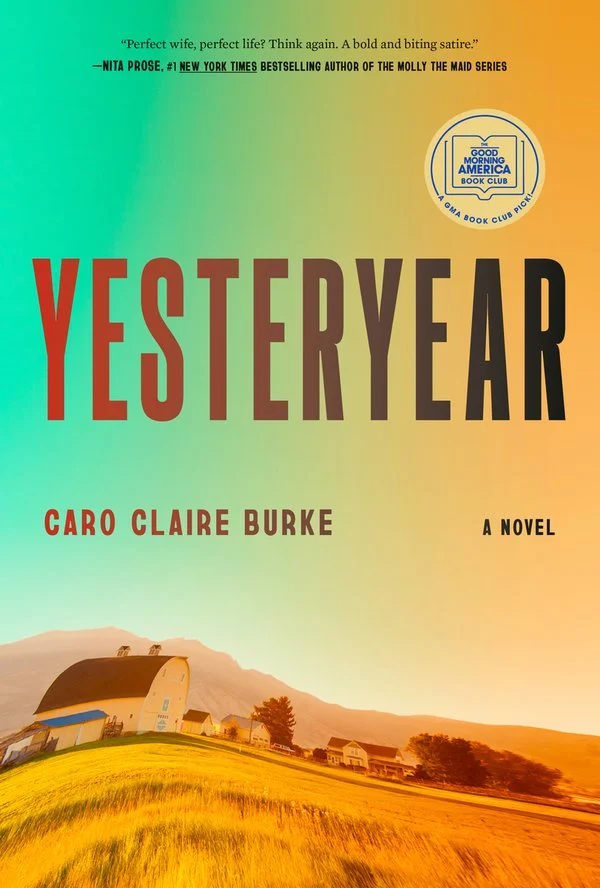
Caro Claire Burke’s Yesteryear (2026) demonstrates how disconnection from memory creates a sense of loss in time. Natalie, a modern-day trad wife influencer, wakes up in 1855, confused, lost, and disoriented. Her memory jumps from present-day events to yesteryear, an unfamiliar time. In this 1855 setting, she has children she does not remember birthing, a husband she is unfamiliar with, and a lifestyle she does not know how to survive. She has no memory of how she ended up here.
Memory involves the registration, encoding, and storage of information for later retrieval (Markowitsch, 2000). Memory keeps us anchored to time and sequence, including reflecting on passage of time. Without memory, we are “lost”.
Natalie is clearly experiencing a memory disorder. The problem is her amnesia presentation isn’t fully aligned with our typical clinical diagnoses. Before we address the psychiatric explanations for the amnesia, let’s take a look at the organic and functional neurological disorders that can cause memory problems.
Our understanding of amnesia comes from neurological studies. One of the most well-known case studies in memory involves a man identified as H.M. This previously healthy 23-year-old man underwent a bilateral resection of the anterior parts of his medial temporal lobes in 1953 to reduce the frequency of his intractable epilepsy. After the surgery, H.M. could not form new, stable memories. H.M.’s form of anterograde amnesia is due to damage to one or more of the limbic structures of the brain. He could not form new explicit memories, but he could continue to learn implicitly.
Memory disorders are often associated with neurological changes. Dementias, including Alzheimer’s, are an example of neurological disorders with significant changes to memory. Brain damage, like in the H.M. case, can impact memory functioning in registration, encoding, and storage. Memory has known neurological pathways in the brain, with the limbic system involved in explicit memories and the basal ganglia system involved in implicit (procedural) memories. The prefrontal cortex is involved in short-term / working memory functions. Memory is widely distributed in the brain, and memory disorders can occur after a number of diseases (Markowitsch, 2000).
In Natalie’s case, we do not have evidence of a neurological disease or injury that would support such a devastating case of retrograde amnesia. When there is not an organic cause of a memory problem, clinicians may consider a functional disorder. Functional neurological symptom disorder has roots in the Freudian concept of conversion disorder and is tied to the historical label hysteria (which is quite fitting in this novel). In contemporary neurology and psychology, functional disorders primarily present with alterations in voluntary motor or sensory functions (American Psychiatric Association, 2022). While historical views of functional problems centered on psychiatric distress, this is less of the case in modern diagnostics (Van Patten & Bellone, 2023). In fact, up to 50% of functional neurological disorder cases lack an identified psychological trauma or stressor (American Psychiatric Association, 2022). While the DSM only notes motor and sensory impairment, there is a growing body of research investigating the cognitive aspects of functional neurological disorders, such as memory loss (Van Patten & Bellone, 2023).
Although there is not an injury or disease that explains the amnesic presentation, functional neurological disorders are genuinely experienced. They are not “faked” or malingering. These cases, in clinical settings, are very difficult for patients and families to process. I have evaluated memory concerns that were reported by the patient as severe (loss of personal knowledge, loss of academic knowledge; all without neurological insult or change) with memory testing coming out in the average range. Having an experience of severe memory loss contrasted with largely average memory functioning is distressing for patients and families.
The fact that Natalie’s amnesia does not fit a classic organic or functional pattern supports the consideration of dissociative amnesia. The Diagnostic and Statistical Manual defines dissociative amnesia as “an inability to recall important autobiographical information, usually of a traumatic or stressful nature, that is inconsistent with ordinary forgetting” (American Psychiatric Association, 2022). It can be selective to a specific event or generalized for life history, and it can be associated with a dissociative fugue episode. Like functional neurological disorder and conversion, dissociative amnesia has roots in Freud’s psychoanalytic theory as a defensive mechanism employed when psychologically overwhelmed (Otgaar et al., 2019).
Natalie’s “time travel” makes sense within the context of dissociative amnesia. The degree of memory loss is substantially more concerning than normal forgetting. In the 1855 setting, she has four unfamiliar children, the eldest being Mary. Mary is 18 years old in the 1855 setting, and Natalie is pregnant with her during her final modern-day memories. Readers assume that Natalie has lost approximately 18 years of autobiographical memory. Her pattern of amnesia seems to fit the generalized dissociative amnesia description, where there is a total loss of autobiographical information (American Psychiatric Association, 2022).
The dissociation amnesia theory is easiest for me to believe, but it still comes with its issues. Neuroscience and metanalyses of memory studies do not substantiate a biological basis for dissociative amnesia (Otgaar et al., 2025). There is debate in the field on the validity of dissociative amnesia, especially in the context of forensic cases and concerns about malingering (Otgaar et al., 2019; Staniloiu & Markowitsch, 2024). Dissociative amnesia is often used interchangeably with repressed memory, which is highly controversial in the scientific literature (Otgaar et al., 2019).
There’s a deeper problem with dissociative amnesia theory: Yesteryear implies that Natalie’s loss of time is related to trauma. Trauma is exceptionally hard to define, especially since it is so subjective. For traumatic disorders like PTSD, behavioral health providers look at events that involve actual or threatened death, violence, or sexual assault (American Psychiatric Association, 2022). What we also know about trauma is that it can be well-remembered; strong memory of traumatic events has been documented in Holocaust survivors, prisoners of war, and sexual assault survivors (Otgaar et al., 2019). Natalie’s final memories of the modern-day setting include being publicly accused of sexual assault and reported death threats from her father-in-law that are not substantiated. It is certainly a stretch to assume that Natalie lost nearly 18 years of her memory due to trauma, even if the death threats were credible. Given that the DSM anchors a diagnosis of dissociative amnesia in a traumatic event, dissociative amnesia is not a perfect explanation for Natalie’s lost time.
The in-book explanation for Natalie’s memory loss is the “pharmaceutical haze” she is in for most of the past 18 years. It is unclear what medications she’s been fed, just that the medications help keep her calm. The description vaguely sounds like benzodiazepines, which are medications used to treat depression, anxiety, and seizures. The severity of Natalie’s memory loss is not fully explained by medication use, especially when we as readers do not know the specific drug class of the pills.
There is also a suggestion that Natalie had some sort of break with reality through progressive retreat to an older style of living to be a “good Christian”. The gradual shift from modern life to yesteryear life does not explain the amnesia (which is usually described as having an abrupt onset). Psychotic episodes are marked by delusions (such as persecutory or grandiose beliefs), hallucinations, disorganized thought/speech, disorganized motor/catatonia, or negative symptoms like anhedonia (American Psychiatric Association, 2022). Psychosis can have a gradual onset, similar to the description of Natalie’s transition from modernity to yesteryear. Memory loss is not typically reported as a symptom of psychosis. I might be able to buy into the 1855 setting as a delusion, though it is muddied by the mention of pills keeping her sedated. Once again, there is a suggestion of a clinical disorder that does not quite fit our understanding of how mental health presents itself.
Yesteryear’s portrayal of memory and behavioral health is a good example of how literature does not always fit our diagnostic criteria and definitions. Burke presents Natalie’s situation as a psychiatric condition without fully fleshing out the symptomology. Rather, the portrayal of Natalie’s “jump” in time feels like a reflection of layperson knowledge of psychiatric memory disorders instead of a clinical diagnosis. Natalie’s symptoms do not cleanly fit dissociative amnesia, psychosis, or substance abuse. Burke even acknowledges the readers’ confusion on where to “place” Natalie in the world of mental health diagnoses; Natalie imagines her eldest daughter trying to diagnose her and coming up empty-handed. As frustrating as this is for me as a neuropsychologist, it has given me so much to chew on as a reader. Sometimes the best way to enjoy a piece of literature is to suspend disbelief.
I would love to hear your thoughts on what’s going on with Natalie’s lost memories. What theories do you have? Visit my substack to let me know?
References
American Psychiatric Association. (2022). Diagnostic and Statistical Manual of Mental Disorders (5th ed., text rev.).
Markowitsch, Hans. J. (2000). Memory and Amnesia. In M.-M. Mesulam (Ed.), Principles of Behavioral and Cognitive Neurology (2nd ed.). Oxford University Press.
Otgaar, H., Howe, M. L., Patihis, L., Mangiulli, I., Dodier, O., Huntjens, R., Krackow, E., Jelicic, M., & Lynn, S. J. (2025). The neuroscience of dissociative amnesia and repressed memory: Premature conclusions and unanswered questions. Legal and Criminological Psychology, 30(S1), 29–46. https://doi.org/10.1111/lcrp.12272
Otgaar, H., Howe, M. L., Patihis, L., Merckelbach, H., Lynn, S. J., Lilienfeld, S. O., & Loftus, E. (2019). The Return of the Repressed: The Persistent and Problematic Claims of Long-Forgotten Trauma. Perspectives on Psychological Science, 14(6). https://doi.org/10.1177/1745691619862306
Staniloiu, A., & Markowitsch, H. J. (2024). Dissociative Amnesia: Remembrances Under Cover. Topics in Cognitive Science, 16(4), 590–607. https://doi.org/10.1111/tops.12734
Van Patten, R., & Bellone, J. A. (2023). The neuropsychology of functional neurological disorders. Journal of Clinical and Experimental Neuropsychology, 45(10), 957–969. https://doi.org/10.1080/13803395.2024.2322798